Empowering NGOs to Build Community Resilience
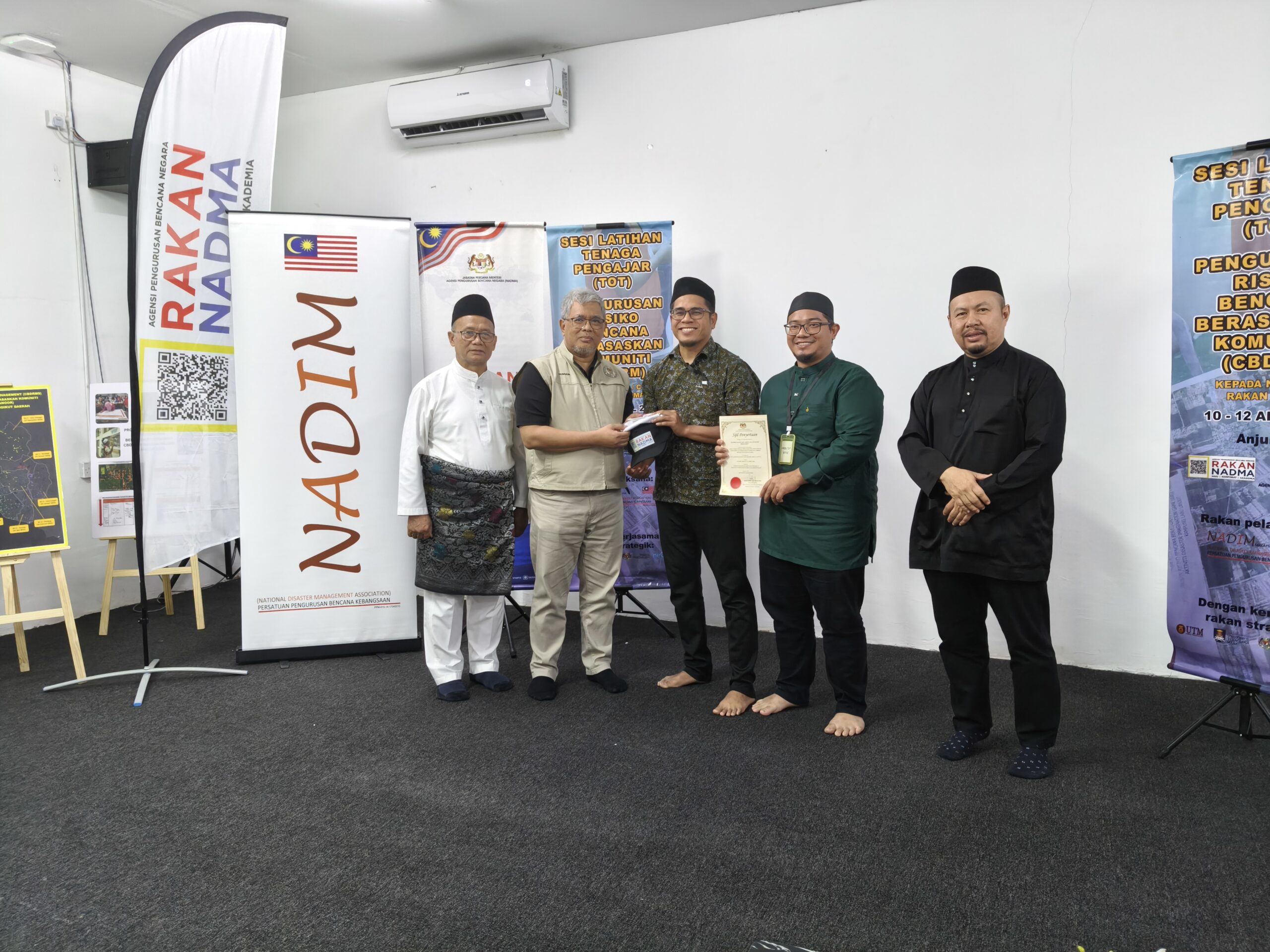
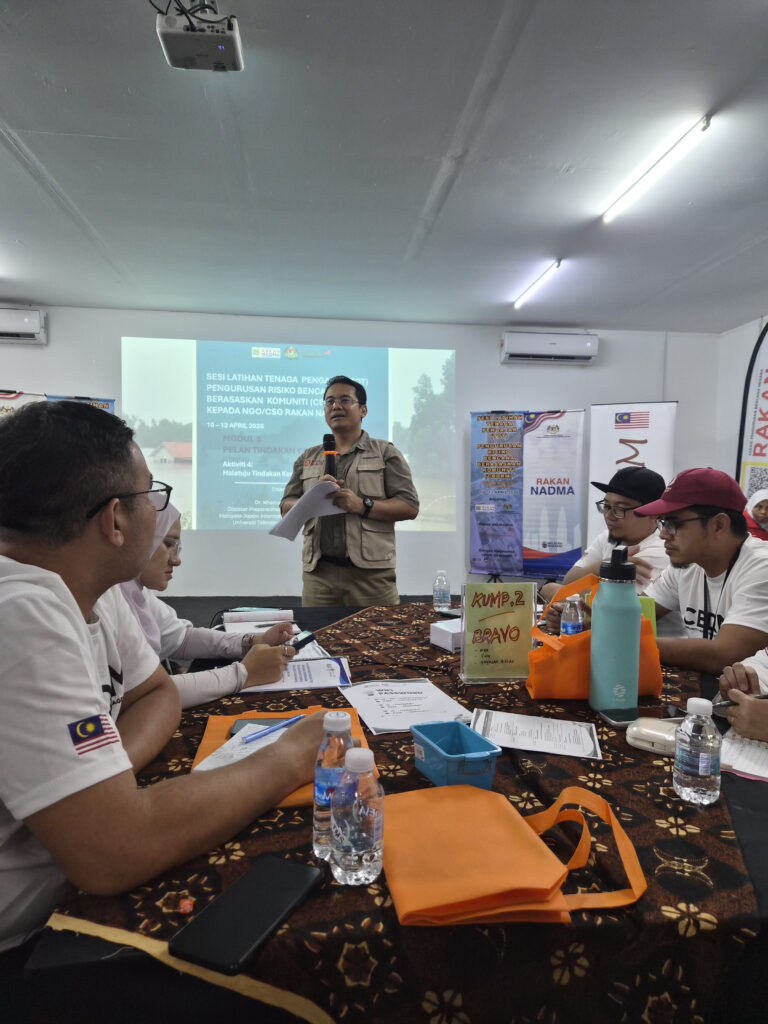
The Sesi Latihan Tenaga Pengajar (ToT) Pengurusan Risiko Bencana Berasaskan Komuniti (CBDRM) was a strategic initiative held from Apr 10, 2026 to Apr 12, 2026 at Nur Lembah Pangsun Eco Resort in Hulu Langat, Selangor. This program aimed to produce competent instructors from NGO and partners under the Rakan NADMA, enabling them to lead disaster resilience efforts at the grassroots level. The training was centered on the new NADMA Directive No. 1, which became effective on Aug 01, 2024, replacing Majlis Keselamatan Negara (MKN) Directive 20 as the national disaster management framework.
The curriculum was delivered through five comprehensive modules designed to provide participants with both theoretical knowledge and practical tools for community engagement:
Module 1: National Disaster Management Mechanism
Introduced the updated NADMA Directive No. 1 and clarified the roles of various agencies at the national, state, and district levels. It also provided critical data on disaster types in Malaysia, including North East Monsoon (MTL) statistics and landslide records.
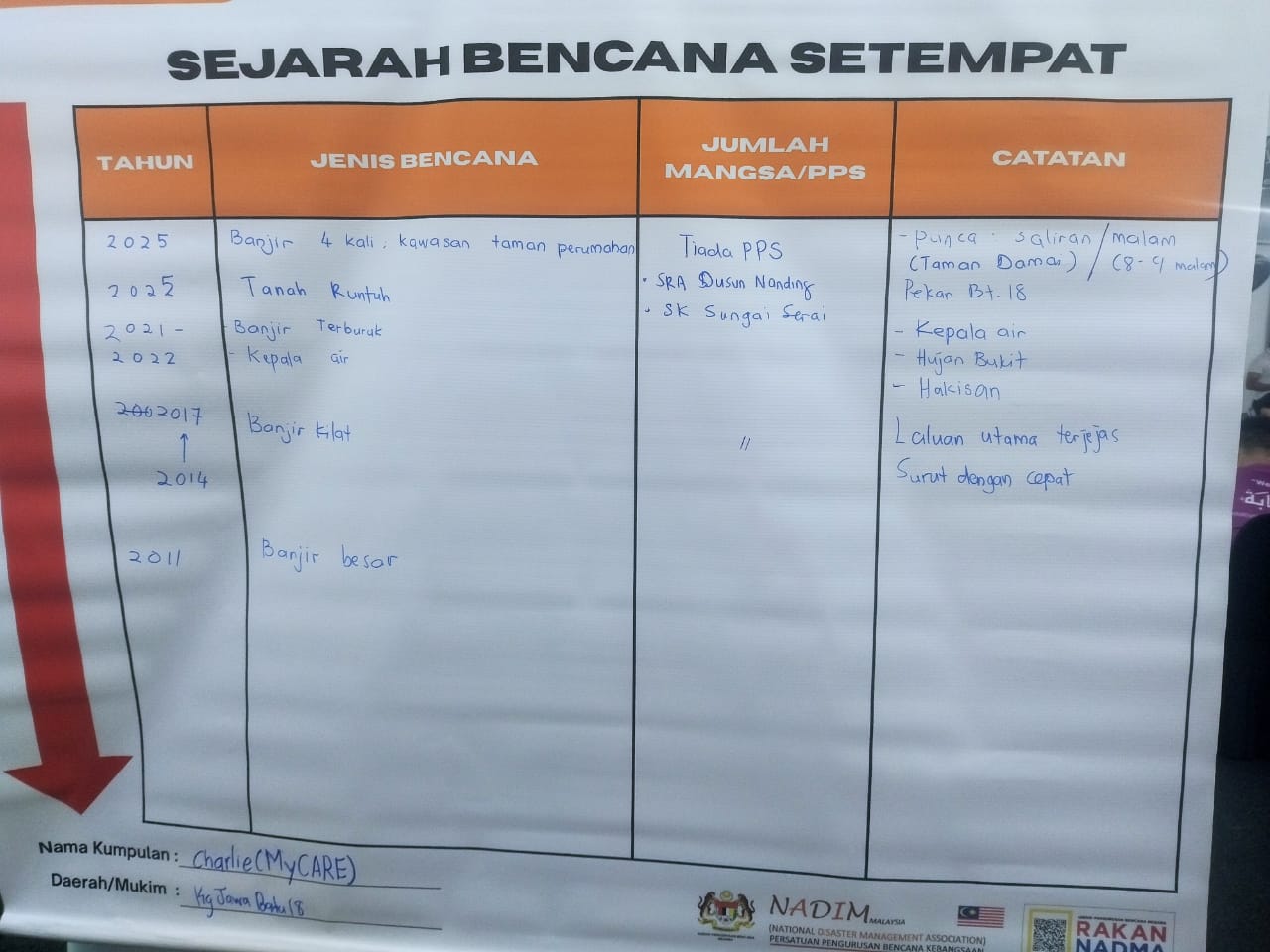
Module 2: Local Disaster History
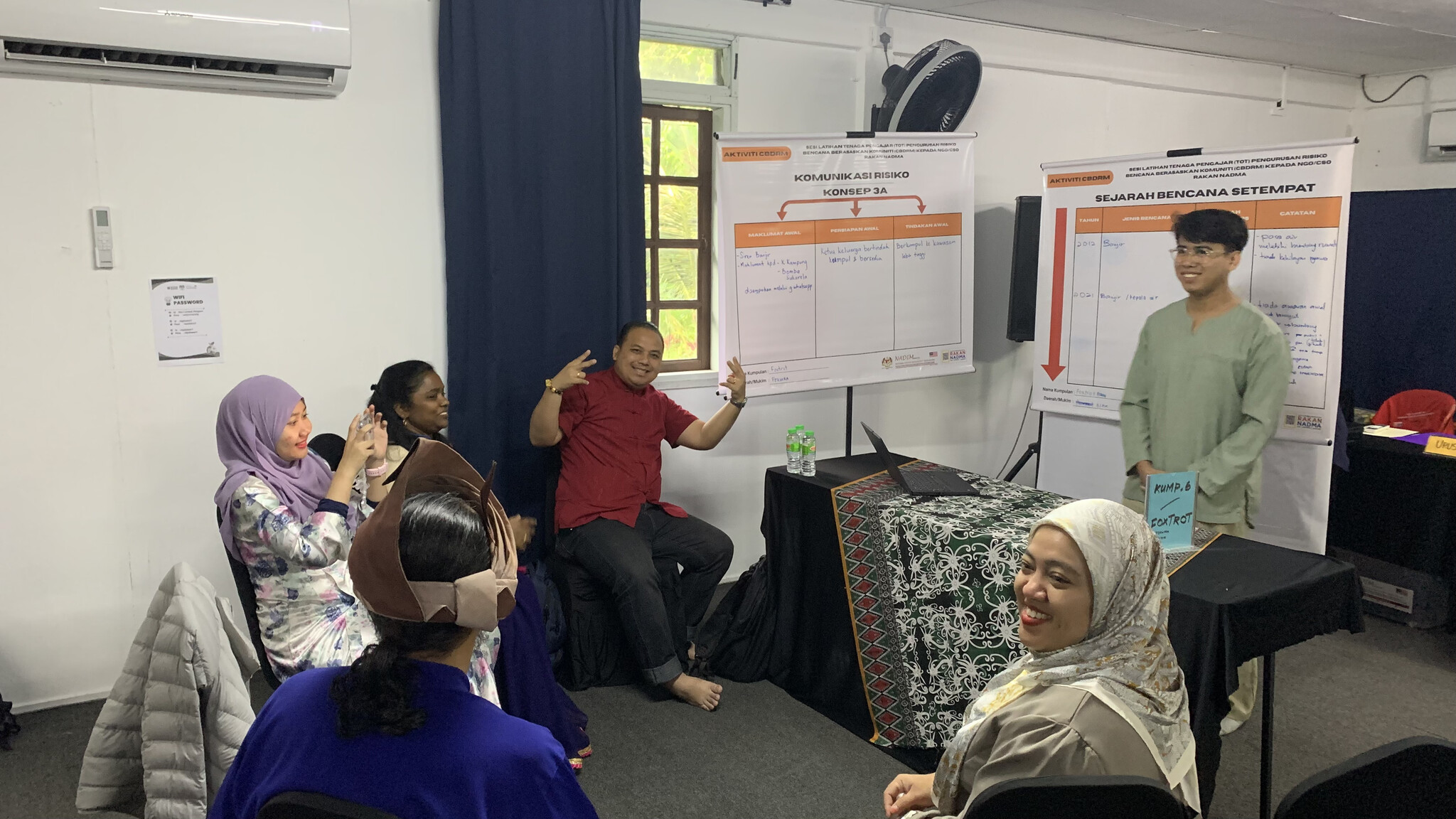
Trained participants to guide communities in analyzing past disaster patterns. By creating timelines of previous events, communities can better predict future risks and develop proactive mitigation strategies.
Module 3: Disaster Risk Communication (3A Concept)
Focused on the 3A model: Early Information (Informasi Awal), Early Preparation (Persediaan Awal), and Early Action (Tindakan Awal). This module emphasized using scientific data from agencies like MET Malaysia and Jabatan Pengairan dan Saliran (JPS) to trigger immediate, life saving responses led by community leaders.
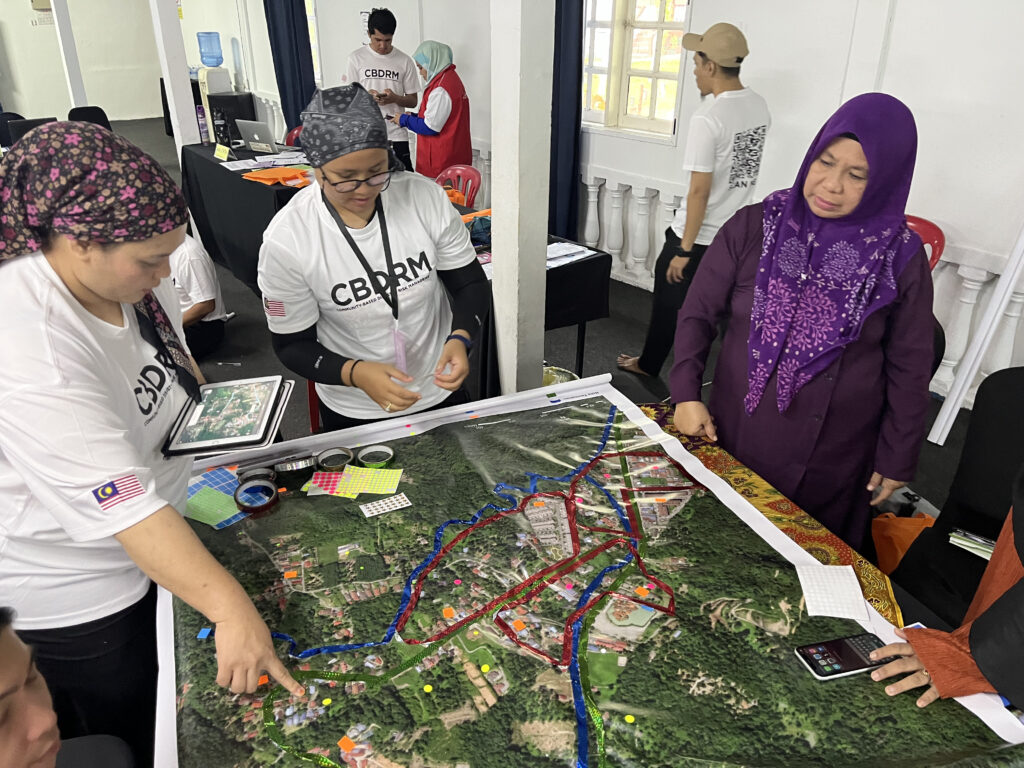
Module 4: Disaster Imagination Game (DIG)
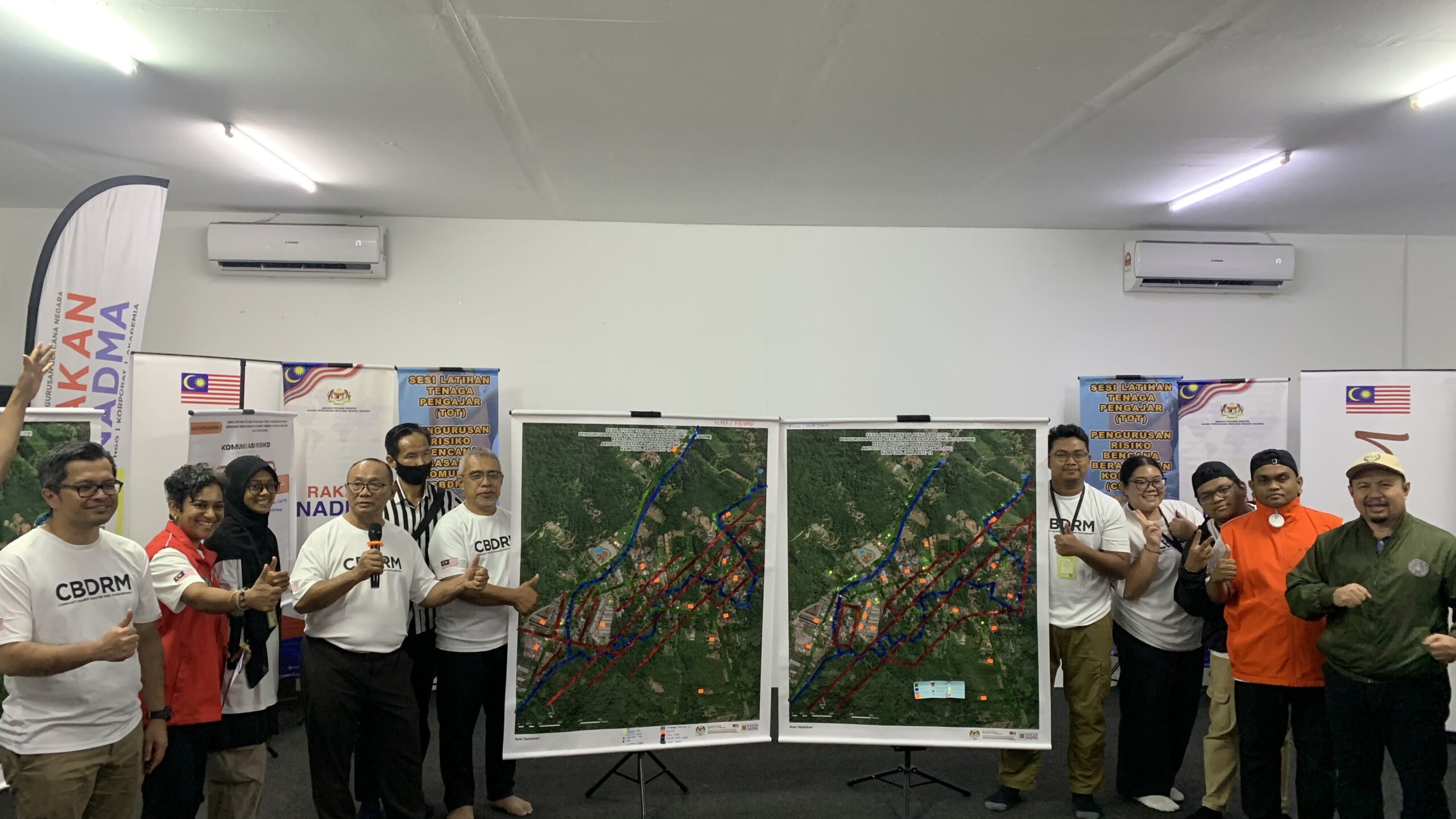
A participatory mapping activity where participants identified high risk residential zones, critical infrastructure, and safe Temporary Evacuation Centers (PPS) on local maps. This exercise helps communities visualize safe evacuation routes and potential hazard areas.
Module 5: Community Action Plan
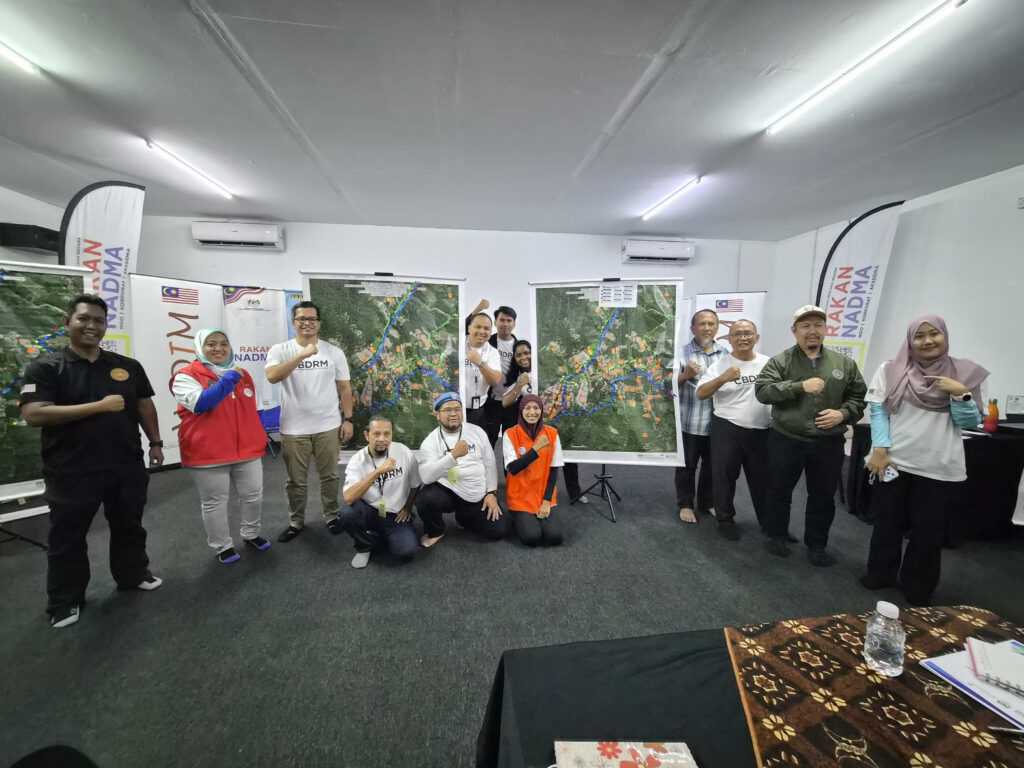
Participants developed detailed execution timelines for actions needed 3 months, 3 weeks, and 3 days before, during, and after a disaster. The plans utilized frameworks for self help, mutual help, and public help to ensure comprehensive resource management.
Leadership and Expert Involvement
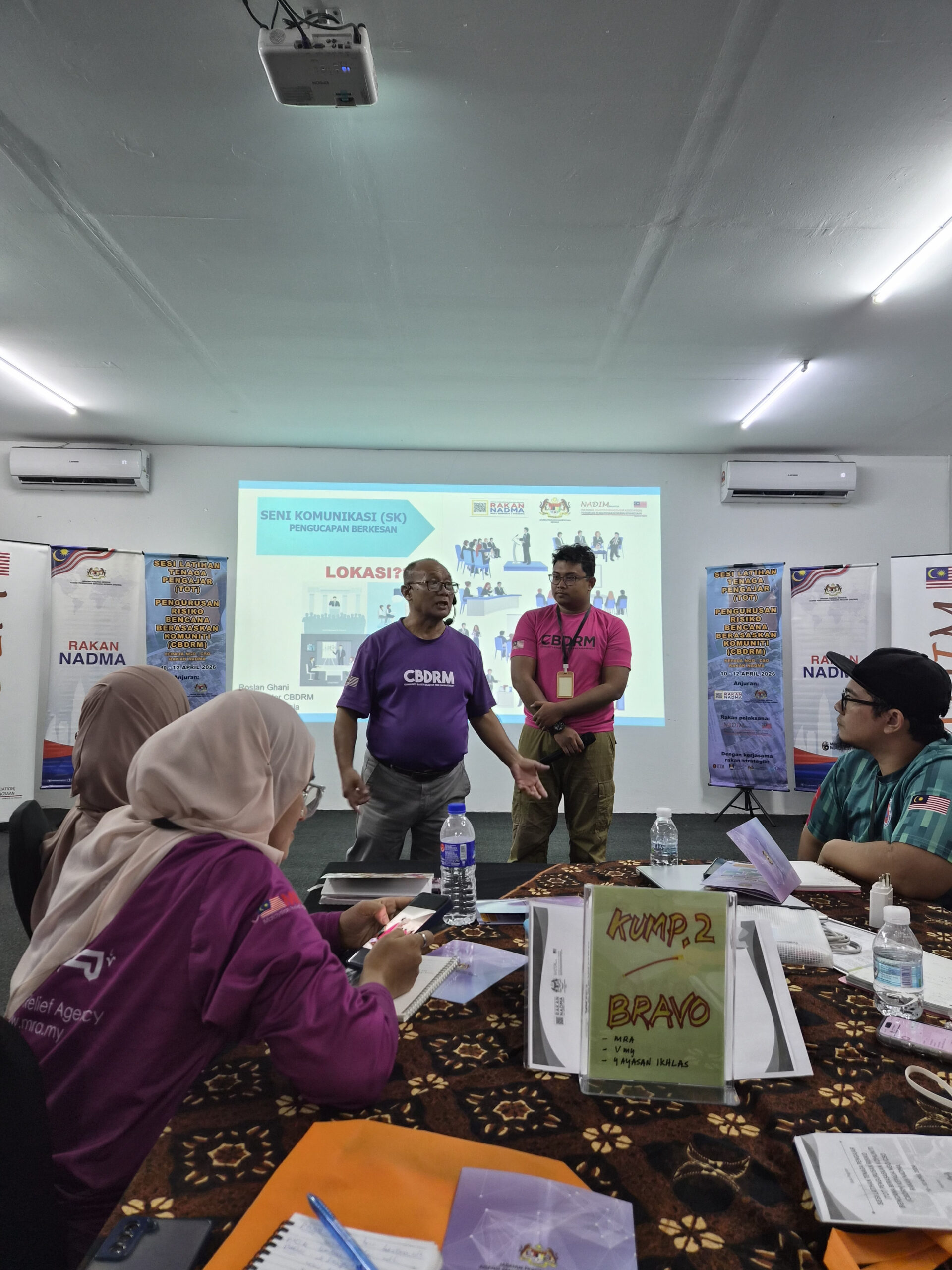
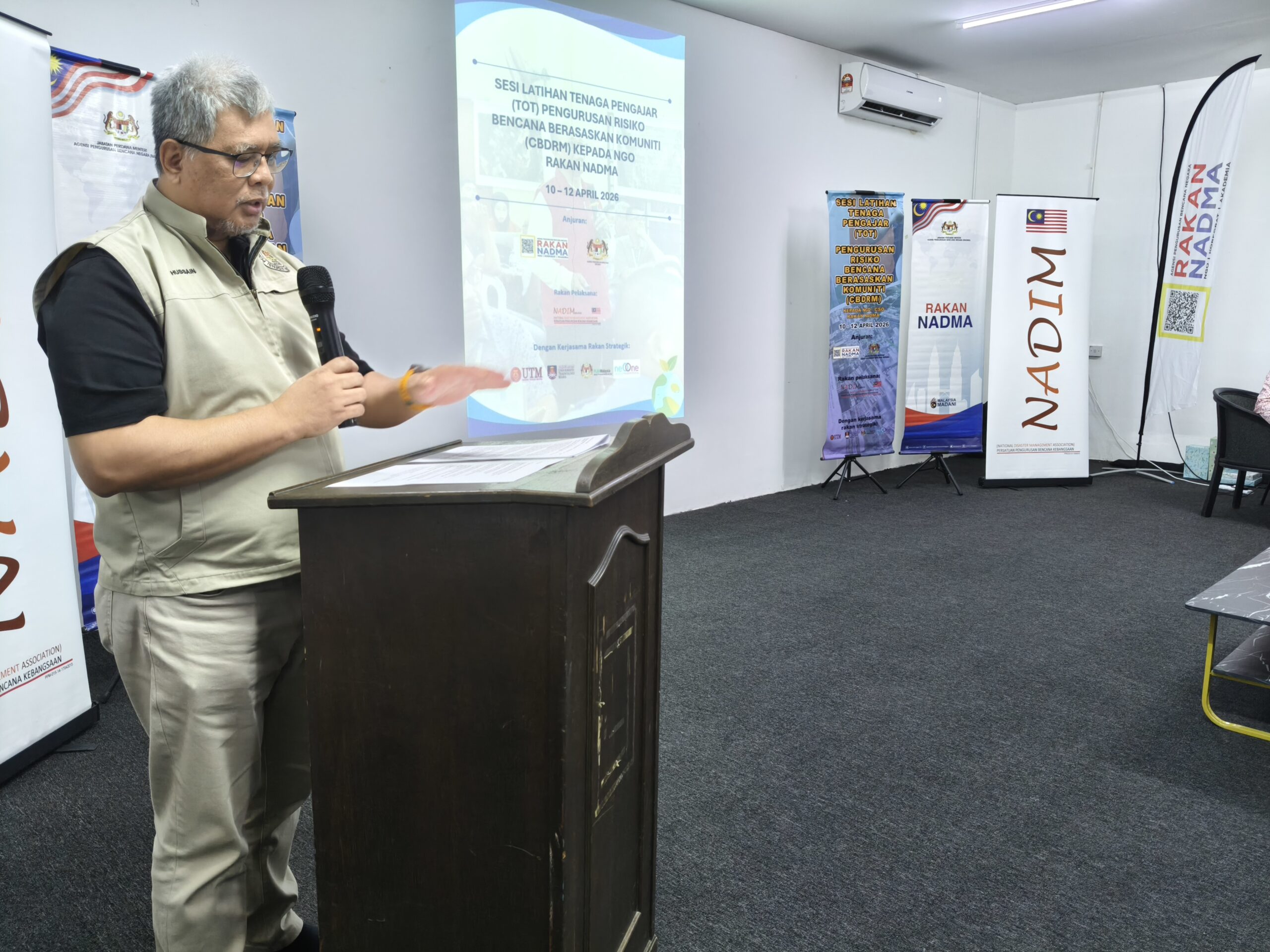
The program was enriched by the participation of senior officials and technical experts who provided both oversight and specialized knowledge. Opening remarks were delivered by Encik Jefny bin Muhammad, Director of Community and Social Development at NADMA, while the closing ceremony was officiated by Ybhg. Datuk Hussain bin Moh, Deputy Director General for Post Disaster Management at NADMA. Coordination for the entire program was led by Tn. Roslan Ab Ghani, the CBDRM Program Coordinator and President of NADIM. Expert instruction throughout the sessions was provided by a panel of specialists, including Prof Madya Ir. Dr. Nor Eliza binti Alias from UTM, TPr. Ezrein Faizal bin Ahmad from PLANMalaysia, and Dr. Kamarrul Azahari Razak from MJIIT, UTM.